

TL;DR

- Massive Cost Avoidance: Facing an anticipated 400% price spike under Broadcom's licensing model, Topgolf migrated 12,000 virtual machines to VergeIO's VergeOS.
- $11.3 Million in Savings: The sports entertainment company eliminated or reduced over $11.3 million in combined infrastructure expenses prior to broader market adjustments for hardware.
- Hardware & Software Reduction: Topgolf cut comparative hardware spend by 87%—replacing 650 VxRail appliances with roughly 400 Dell PowerEdge servers—while lowering software licensing costs by 77%.
- Modernized Edge Architecture: The cutover coincided with shifting venue gaming workloads to in-bay edge panels running Kubernetes, with complete VMware decommissioning scheduled for mid-December 2026.
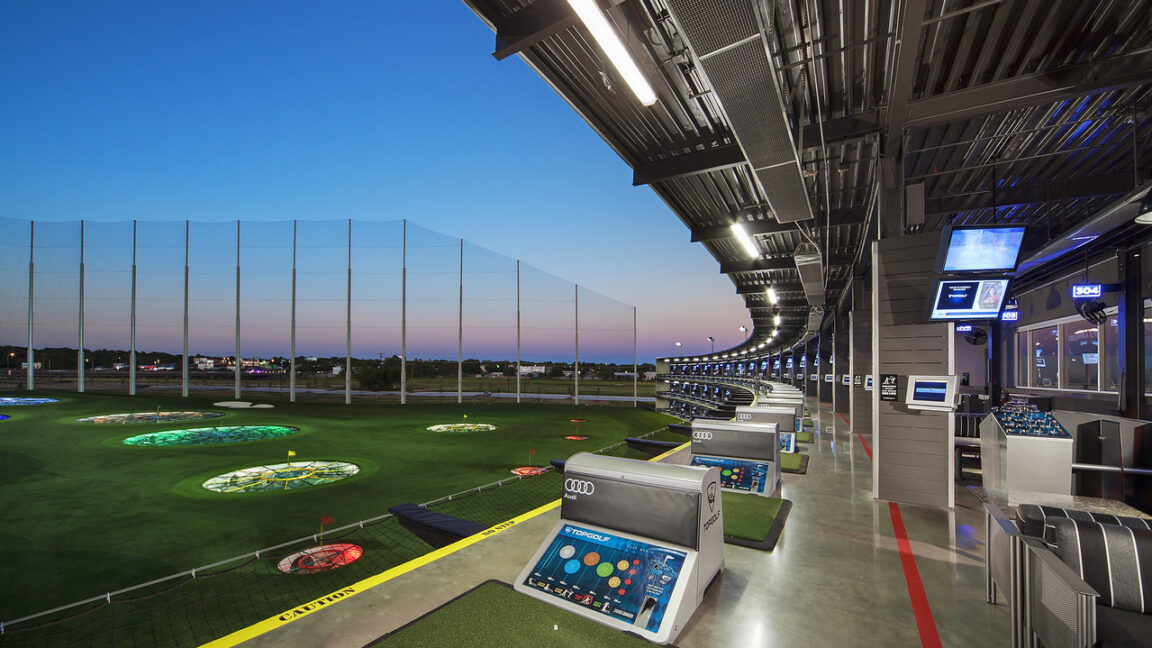
When Broadcom finalized its acquisition of VMware and overhauled its product licensing structure, enterprises worldwide were forced to reevaluate their data center economics. Among the most striking examples of this migration wave is Topgolf, the global sports entertainment enterprise with more than 100 technology-driven venues worldwide. Faced with an impending 400 percent surge in VMware software costs, Topgolf initiated a comprehensive migration of 12,000 virtual machines (VMs) to VergeIO's VergeOS virtualization platform, ultimately saving more than $11.3 million.
The move represents a monumental operational pivot. For decades, Topgolf's enterprise foundation was built squarely upon VMware's vSphere and ESXi hypervisors. In 2017, the organization expanded that commitment by deploying VxRail—the hyperconverged infrastructure (HCI) solution co-engineered by VMware and Dell. Topgolf engineers actively participated in VMware customer councils, served as case studies in enterprise publications detailing vSphere and Horizon deployments, and maintained active community leadership, with Topgolf Global Infrastructure Manager Scott Forehand serving as a leader for the Dallas/Ft. Worth VMware User Group.
Despite those longstanding relationships, Broadcom's strategy of eliminating perpetual licenses and consolidating virtualization tools into fewer, larger, and significantly costlier product bundles altered the calculus for Topgolf's infrastructure team.
Evaluating the $11.3 Million Infrastructure Savings

Topgolf's transition encompassed workloads spanning global venues, corporate offices, development testing labs, and core data centers. According to Forehand, moving off the VMware stack delivered dramatic financial relief across multiple budget categories.
Overall, we reduced or eliminated over $11.3 [million] in combined infrastructure costs prior to the adjustments in hardware cost in the market. Comparatively, it’s much more now when you look at the cost of a solution similar to the configuration of the old VxRail solution we installed.
The financial breakdown highlights substantial reductions across both hardware procurement and software licensing:
- Comparative Hardware Savings of 87%: Topgolf replaced 650 specialized VxRail hosts with approximately 400 standard Dell PowerEdge servers over a six-month period. A published VergeIO case study noted that Topgolf transitioned from six-node VxRail clusters provisioned with 35TB of storage capacity down to streamlined three-node VergeOS clusters with 5TB of capacity. While subsequent market-wide price increases in compute and storage components impacted raw figures, Forehand confirmed that overall savings remain exponential.
- Software Cost Reductions of 77%: Software expenditures dropped precipitously under the new licensing arrangement. Furthermore, Topgolf secured a five-year Enterprise License Agreement (ELA) with VergeIO, contrasting favorably with the three-year ELA reportedly offered by VMware.
VergeIO Chief Marketing Officer George Crump explained that while Topgolf's sheer scale yields larger dollar savings than the typical mid-sized deployment, the underlying economic advantages are consistent. According to Crump, customers departing VMware routinely see meaningful reductions across three areas: software licensing expenses, expensive proprietary HCI appliances, and separate subscriptions for multi-site replication, backup, and data protection.
Why Topgolf Chose VergeOS: Multi-Tenancy and Automation
Virtualization platforms manage physical computing power, memory, and storage, allowing organizations to run multiple isolated virtual machines on shared physical servers. In Topgolf's expansive environment, the primary operational challenge was managing hundreds of geographically dispersed locations at scale.
Multi-Tenant Virtual Data Centers (VDC)
Under VMware, managing clusters across hundreds of venues proved increasingly cumbersome. Forehand stated that VMware lacked the native capability to segregate server clusters into discrete tenants, and even VMware's Software-Defined Data Center (SDDC) Manager could not efficiently scale to handle Topgolf's extensive volume of vCenter instances.
VergeOS addressed this operational bottleneck through its Virtual Data Center (VDC) multi-tenancy feature. Each tenant functions as an autonomous, self-contained data center. By partitioning deployments into distinct tenants structured by time zone, Topgolf's engineering teams can execute maintenance routines, rolling upgrades, and administrative tasks without disrupting venue operations. Additionally, the team utilized VergeOS tenancy to construct nested staging labs within a single physical cluster, drastically reducing hardware outlays for testing environments.
API-First Architecture and Infrastructure-as-Code
Another deciding factor was automation. Modern IT operations rely on infrastructure-as-code (IaC) tools to define, provision, and configure server infrastructure automatically using declarative scripts. Because VergeOS is architected with an API-first approach, Topgolf was able to maintain its automated workflows without undertaking an expensive overhaul. VergeIO engineers collaborated with Topgolf early in the migration to establish native support for automation tools including Terraform and Ansible.
Powering Edge Analytics with Toptracer
The infrastructure migration also had to accommodate specialized, data-intensive workloads. Topgolf venues rely on its proprietary Toptracer technology—a camera- and sensor-driven computer vision system that tracks golf ball trajectories in real time using machine learning.
In a standard 102-bay facility, Toptracer cameras generate approximately 40TB of network traffic per day. Running these machine learning workloads inside the VergeOS cluster initially presented latency and pathing challenges. VergeIO worked closely with Topgolf engineers to optimize network routing and balance the massive telemetry load evenly across cluster nodes.
Migration Challenges: Modernizing the Gaming Stack
Decoupling an enterprise from a foundational technology vendor involves significant operational complexity. For Topgolf, the primary obstacle was orchestrating multiple facility upgrades concurrently with the server changeover.
Under the prior VxRail setup, venue gaming systems were computed directly on central rack-mounted servers. In conjunction with adopting VergeOS, Topgolf redesigned its venue gaming architecture, moving computing power directly to edge game consoles located at each individual bay. Forehand noted that this initiative required replacing in-bay game touchscreens, rewiring structural columns throughout venues, deploying a modern Kubernetes container gaming framework, and swapping the server backend simultaneously to clear accumulated technical debt.
Navigating Third-Party Tool Compatibility
Another major point of friction was third-party software integration. VMware's decades-long dominance established deep ecosystem compatibility with enterprise security and monitoring tools. Alternative virtualization platforms often require organizations to adapt their tooling.
When Topgolf found that tools like Rubrik and LogicMonitor presented integration hurdles on VergeOS, the team adjusted its approach:
- Data Protection: Topgolf transitioned from Rubrik to VergeOS's native snapshotting mechanism to maintain robust data protection.
- Security and Threat Hunting: To replace advanced security capabilities such as automated threat hunting and ransomware protection formerly provided through Rubrik, Topgolf pivoted to Veeam.
Forehand noted that educating executive leadership on these operational gaps represented a crucial "hearts-and-minds" effort during the cutover. Crump acknowledged that third-party tool integration is the most common friction point facing migrators, explaining that VergeIO aims to resolve these bottlenecks by building core capabilities directly into VergeOS while partnering with leading industry vendors.
Broadcom's Fallout Fuels Enterprise Virtualization Exodus
Topgolf's migration is not an isolated event. Since Broadcom completed its acquisition of VMware, competing infrastructure vendors—including VergeIO, Nutanix, and Hewlett Packard Enterprise (HPE)—have aggressively courted enterprise customers wary of escalating renewal fees.
According to Crump, VergeIO currently adds roughly 70 new enterprise clients each quarter, the vast majority of which are transitioning away from VMware. These organizations are typically motivated by upcoming contract renewals, looming hardware refresh cycles, multi-site operational requirements, or multi-tenant hosting demands.
As of October 2026, Topgolf still operates 20 venue locations on Dell EMC VxRail running VMware Cloud Foundation (VCF). However, the migration is rapidly drawing to a close. Forehand expects Topgolf's global venue network to be fully disconnected from VMware by the second week of December 2026, completing one of the industry's most significant enterprise infrastructure migrations.
Frequently Asked Questions
Why did Topgolf choose to migrate away from VMware?
Topgolf was facing a projected 400 percent price increase following Broadcom's acquisition of VMware. Broadcom ended the sale of perpetual software licenses and restructured its catalog into larger, costlier bundles, making long-term planning unsustainable for Topgolf's distributed infrastructure.
How much money did Topgolf save by moving to VergeOS?
Topgolf eliminated or reduced more than $11.3 million in combined infrastructure costs prior to market adjustments in hardware pricing. Software licensing expenses fell by 77 percent, and comparative hardware spending dropped by 87 percent after switching to Dell PowerEdge servers.
What hardware and software replaced Topgolf's VxRail setup?
Topgolf replaced approximately 650 Dell EMC VxRail hosts with roughly 400 standard Dell PowerEdge servers running VergeIO's VergeOS platform. Cluster sizes shrank from six-node configurations with 35TB of storage to three-node configurations with 5TB of capacity.
What technical advantages did VergeOS provide Topgolf?
VergeOS provided built-in Virtual Data Center multi-tenancy, enabling Topgolf to group deployments by time zone for simplified updates and host nested development labs inside single clusters. Its API-first architecture also integrated seamlessly with existing Terraform and Ansible infrastructure-as-code scripts.
What challenges did Topgolf face during the migration?
Topgolf had to manage multiple simultaneous infrastructure upgrades, including replacing in-bay game displays, rewiring venue columns, and shifting to a Kubernetes gaming architecture. It also addressed third-party tool integration hurdles with platforms like Rubrik and LogicMonitor by adopting native VergeOS snapshotting and integrating Veeam for cybersecurity capabilities.
When will Topgolf be completely finished leaving VMware?
Topgolf Global Infrastructure Manager Scott Forehand reported that 20 venues remained on VxRail and VMware Cloud Foundation in October 2026, with the organization scheduled to decommission its final VMware systems by the second week of December 2026.


0 Comments