

TL;DR
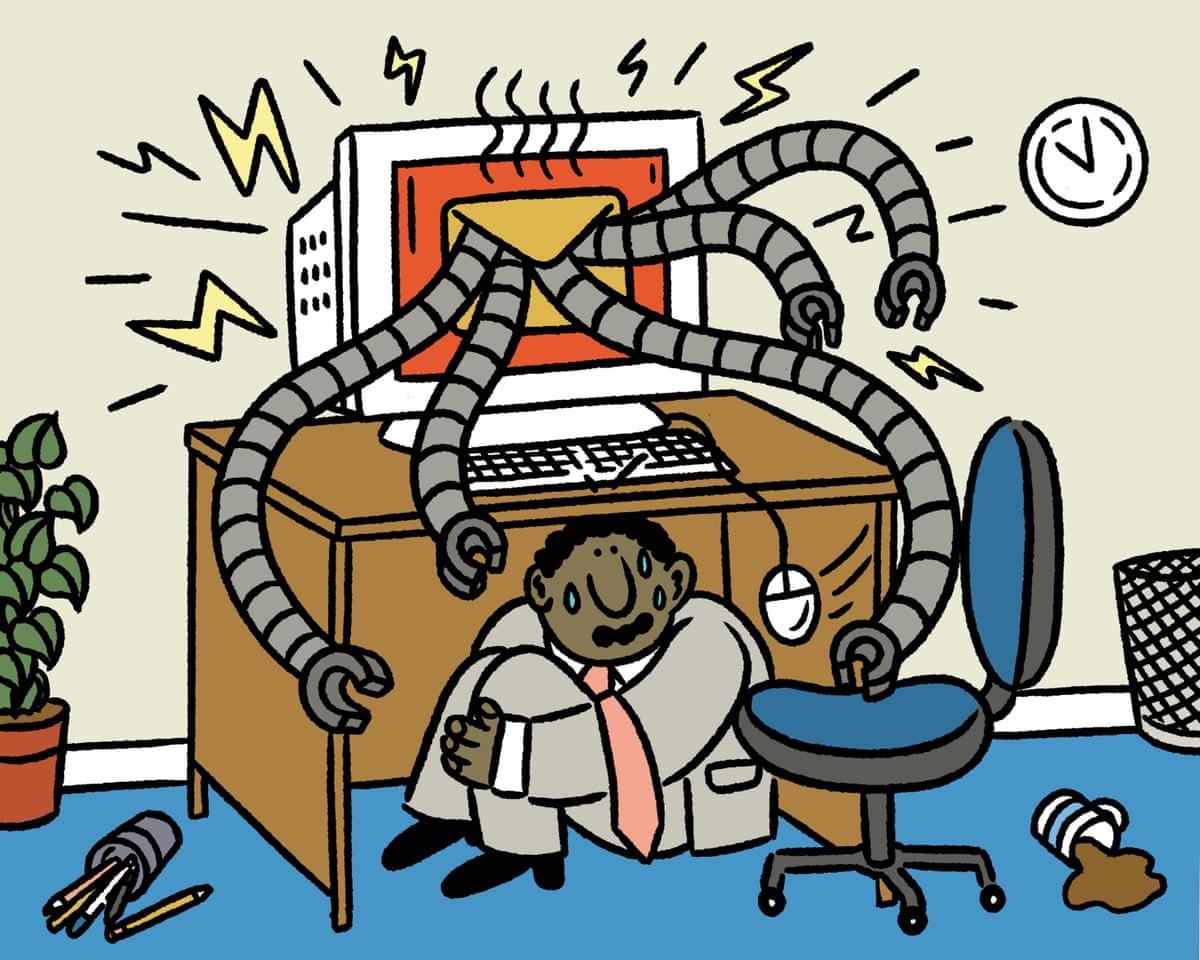
- The Phenomenon: UK public institutions, municipal councils, and parliamentary offices are facing an overwhelming influx of chatbot-drafted correspondence, an operational bottleneck observers call "AI clog."
- Document Bloat: Routine complaints previously spanning one or two pages are now routinely expanding to 20 pages—and in extreme cases up to 200 pages—stuffed with irrelevant statutes, false precedents, and aggressive formatting.
- Operational Paralysis: In some offices, an estimated 50% of incoming emails now involve generative AI, straining fixed public budgets and contributing to backlogs across local services, Transport for London, and employment tribunals.
- Mandatory Human Review: The Information Commissioner's Office (ICO) has clarified that despite inaccuracies and artificial phrasing, public bodies remain legally obligated to review and respond to these filings manually.
- Emerging Countermeasures: Authorities are considering word caps, structured templates, bot-blocking rules, and even their own AI triage systems, though experts warn of the risks of "machine talking to machine."
The Rise of "AI Clog" Across Public Institutions

Across the United Kingdom, caseworkers, municipal administrators, and public officials are reporting a rapid shift in the nature of incoming correspondence. What began as an occasional curiosity in 2024 has transformed into an unmanageable flood of artificial intelligence-generated grievances, freedom of information requests, and legal challenges.
The widespread adoption of generative AI systems—such as OpenAI's ChatGPT, Anthropic's Claude, Microsoft Copilot, and Google Gemini—has fundamentally altered the barrier to generating formal text. For years, submitting a detailed planning objection, formal complaint, or legal claim required significant time, specialized knowledge, and effort. Today, accessible chatbots allow any user to produce voluminous, authoritative-sounding documents in seconds.
While AI developers originally promised transformative productivity gains for the workforce—and economists have credited AI with contributing to better-than-expected UK GDP growth in 2026—public sector bodies are experiencing the opposite effect. Commentators have termed this operational bottleneck "AI clog," while researchers at the Centre for Digital Governance at the Hertie School in Berlin, the Cooperative AI Foundation, and GovAI have formally classified the dynamic as "agentic flooding." The underlying issue is an asymmetric burden: while generating artificial submissions requires virtually no time or cost from the sender, verifying and responding to them demands extensive manual labor from stretched human employees.
Local Councils Face Bloated Dossiers and Fixed Budgets
The impact of this influx is acutely felt across local government. According to Deborah Evans, chief executive of Lawyers in Local Government (LLG)—a professional body representing 5,600 local authority legal professionals—the surge is affecting public organisations across the board. Evans noted that while AI offers valuable assistance by helping citizens draft articulate correspondence, it frequently distorts the scale and nature of ordinary complaints.
Before the widespread consumer uptake of chatbots, typical complaints submitted to municipal councils spanned roughly two pages. Today, Evans reported, the majority are approximately 10 times longer, averaging 20 pages. In the most severe case brought to her attention, a single complaint stretched to 200 pages. These submissions span everything from objections to local planning proposals and missed bin collections to complex disputes regarding adult social care provisions.
This document bloat directly imperils council finances. Local authorities operate from fixed budgetary allocations and receive no supplemental funding to manage elevated volumes of administrative disputes. As Evans pointed out, every pound spent on processing protracted complaints is a pound diverted away from front-line public services.
Municipal leaders confirm that the operational strain is escalating. Councillor Alessandro Georgiou, leader of Enfield Council, reported a significant uptick in residents deploying AI to contest council decisions, particularly in parking penalty appeals. Councils report that AI-generated filings often share tell-tale characteristics, including unnatural document length, distinctive boilerplate phrasing, and extensive bulleted lists.
Technical Anatomy: Hallucinations, Irrelevant Law, and Missing Solutions
To understand why "AI clog" poses such an acute challenge for administrators, it is necessary to examine how large language models (LLMs) construct text. Rather than conducting factual analysis or verifying statutory authority, LLMs generate text by predicting statistically probable sequences of words based on their training data. When prompted to draft a complaint, these models often adopt an adversarial, legalistic persona, treating routine administrative grievances as high-stakes courtroom litigation.
This mechanism introduces several operational hurdles for public sector staff:
- Hallucinations and Fabricated Precedents: Generative models are prone to "hallucinations"—generating confident but entirely fictional claims. In administrative complaints, chatbots have been observed inventing statutes or citing judicial rulings that do not exist.
- Jurisdictional Mismatches: Evans explained that AI engines frequently cite case law without regard for geographical boundaries, mistakenly incorporating legal decisions from foreign jurisdictions, such as Canada, into standard UK council disputes.
- Conversational Validation: Chatbots are trained to provide agreeable, supportive responses. Business owners and legal experts report that this validating tone often instills users with misplaced confidence, convincing them that a minor disagreement constitutes a severe legal violation.
- Omission of Desired Remedies: Jim Moore, an employee relations expert at HR consultancy Hamilton Nash, noted that AI-drafted complaints are frequently "unnecessarily verbose" and portray trivial disputes as major offences. Crucially, Moore observed that these filings often omit the core objective of an administrative grievance: specifying what practical resolution or remedy the complainant actually seeks.
Systemic Strain: Tribunals, Transport, and Parliamentary Offices
The consequences of AI-driven correspondence extend far beyond local council chambers, causing widespread friction throughout the UK's legal and transport infrastructure.
Employment Tribunals and Legal Backlogs
The UK employment tribunal system is feeling the effects of widespread AI legal drafting. Official government data revealed that single-claimant employment tribunal claims opened between April and June surged by 28% compared with the same period a year earlier, representing 14,000 new cases. With case disposals declining over the same interval, the backlog reached 70,000 open single claims by the end of June.
Employers report facing substantial costs to defend against automated claims. The founder of one technology startup described spending an anticipated £30,000 in legal expenses to contest an employment tribunal claim filed by an underperforming former employee, citing distinct AI phrasing and tone throughout the claimant's submissions.
Transport for London and FOI Records
Transport for London (TfL), which oversees the capital's public transit network, recorded an all-time high of 4,769 Freedom of Information (FOI) requests during the 2025–26 period—a 5% rise over its prior peak in 2023–24. Minutes from TfL's audit and assurance committee noted a distinct increase in AI-generated appeals characterized by highly technical, inaccurate assertions and unsupported assumptions.
Constituent Casework in Parliament
Caseworkers supporting Members of Parliament report being pushed to their limits. Hollie Wickens, a senior caseworker in a Labour MP's office with a decade of experience, stated that approximately half of the emails her office receives now exhibit signs of AI authorship. Wickens explained that the sheer complexity and verbosity of these messages make processing them significantly more taxing.
In Scotland, Vonnie Sandlan, head of office for Labour MP Graeme Downie (Dunfermline and Dollar), reported that staff have been left "exhausted" and are routinely working unpaid hours to manage the backlog. To maintain focus on direct constituent requests, the office took the step of halting responses to automated "click-to-email" mass campaigns. Lisa Gillmore, president of the MPs' and peers' staff branch at the GMB union, confirmed that casework has doubled or more in offices tracking their figures.
Regulatory Requirements and Emerging Countermeasures
Despite the factual inaccuracies and excessive length common in chatbot filings, public authorities cannot simply discard them. The UK's information rights regulator, the Information Commissioner's Office (ICO), found a broad increase in public authority requests during 2025. The ICO acknowledged that AI-generated submissions are frequently repetitive and unfocused, but explicitly cautioned that public bodies remain legally required to have human staff review and answer them.
Faced with mounting workloads, institutions and researchers are exploring several strategies to mitigate the impact:
- Word Limits and Structured Forms: Some public ombudsman services have introduced formal word count ceilings for complaint submissions and deployed online portal templates that restrict the size and format of file attachments.
- Process Friction and Gatekeeping: Researchers from the Hertie School, the Cooperative AI Foundation, and GovAI have suggested that authorities may need to introduce friction into the submission process, such as nominal filing fees or technical bot-blocking controls on government portals.
- Internal AI Triage: Several local authorities are experimenting with AI solutions to counter the influx. Wiltshire Council has stated it is exploring AI tools to summarize lengthy incoming correspondence and draft initial responses, while Stroud District Council in Gloucestershire has discussed using Microsoft Copilot to assist in drafting reports.
- Civil Service Guidelines: The UK government has issued directives to civil servants regarding AI usage, emphasizing that staff must independently verify all facts, avoid inputting personal data into external models, and ensure human employees retain full oversight and final decision-making power.
However, legal experts and observers urge caution regarding automated triage. As Deborah Evans warned, deploying AI to filter AI-drafted mail risks creating a closed loop of "machine talking to machine" while eroding the human touch essential to public service. Technology journalist Jamie Bartlett concluded that public bodies and enterprises will inevitably need to establish stricter submission rules or implement automated filtering to prevent their administrative systems from becoming entirely overwhelmed.
Frequently Asked Questions
What is "AI clog"?
"AI clog" is a term used by commentators to describe the severe operational gridlock experienced by public bodies, municipal councils, and parliamentary offices due to an influx of artificial intelligence-generated letters, grievances, and legal challenges. Researchers refer to this trend as "agentic flooding."
Why are AI-generated complaints harder for public sector staff to process?
Chatbots often expand straightforward grievances into 20- to 200-page submissions filled with aggressive legalese, bullet points, and irrelevant commentary. Furthermore, because AI models frequently "hallucinate" false legal precedents or cite statutes from foreign jurisdictions, human staff must spend extensive time fact-checking claims to identify what the citizen is actually requesting.
Can UK public authorities legally ignore complaints written by AI?
No. The UK Information Commissioner's Office (ICO) has clarified that even if a request appears to be generated by artificial intelligence and contains factual inaccuracies, public authorities are legally obligated to have human staff review and provide a response.
How are public organisations attempting to manage the influx?
Measures under consideration or in active use include establishing strict word limits on complaint forms, restricting online file attachments, deploying bot-detection mechanisms on public portals, and testing internal AI summarisation tools. However, officials emphasize that human review must remain central to public decision-making.


0 Comments