


Quick Take: What to Expect (TL;DR)
- Keynote Schedule: Meta CEO Mark Zuckerberg will deliver the opening keynote on September 23, 2026, at 4:00 PM PT / 7:00 PM ET live from Menlo Park, followed by developer sessions on September 24.
- Audio-Centric Smart Glasses: Reports suggest Meta is developing camera-free smart glasses in two styles, utilizing microphone arrays to interact with Meta AI while eliminating video privacy concerns.
- 'Phoenix' Mixed Reality Headset: Leaked firmware reveals a slim, goggle-style headset tethered to an external compute puck, reportedly running Qualcomm's Snapdragon Reality Elite processor with hand and eye tracking.
- AI and Software Ecosystem: Updates are anticipated for Meta's Muse AI agent, third-party wearable applications, photorealistic avatars, and entertainment-focused HorizonOS content.
Meta is gearing up for its annual marquee developer conference, Meta Connect 2026. While the event initially debuted years ago as a forum dedicated strictly to virtual reality hardware, it has steadily transformed into Meta's premier showcase for consumer hardware, artificial intelligence, and spatial computing. With Mark Zuckerberg scheduled to deliver the keynote address on September 23, 2026, at 4:00 PM PT (7:00 PM ET) from the company's Menlo Park headquarters, expectations are high across hardware and software divisions alike.

Following the evening keynote, the conference will continue on September 24 with a "developer state of the union" at 10:00 AM PT (1:00 PM ET), accompanied by technical sessions. With intense industry focus on rapid AI development and wearable technology, reports from Engadget and industry insiders indicate this year's keynote could highlight major strategic pivots in smart glasses, compact mixed reality hardware, and conversational AI agents.
Next-Generation Smart Glasses: Exploring a Camera-Free Approach
Smart glasses have grown into one of Meta's most visible consumer product lines, but upcoming releases may diverge significantly from previous hardware models. According to reports cited by Engadget, Meta is actively working on a pair of camera-free frames planned in two distinct style variants. Rather than incorporating miniature camera sensors in the frame corners, these glasses are expected to feature dedicated microphone arrays optimized for seamless, voice-first communication with Meta's AI assistant.
Balancing Form Factor and Privacy Considerations
Removing optical cameras provides two immediate practical advantages. First, it allows the physical frames to be noticeably slimmer and lighter, resembling standard prescription glasses rather than bulky tech eyewear. Second, and perhaps more importantly, camera-free frames offer a structural answer to ongoing public backlash regarding recording devices in public environments.
Smart glasses equipped with front-facing cameras have faced consumer scrutiny over privacy etiquette. In recent weeks, Meta has taken steps to curb misuse by cracking down on users who tamper with outward-facing recording LED indicators or record confrontational videos. During a recent Instagram Q&A session, Meta Chief Technology Officer Andrew Bosworth confirmed that the company plans to address these privacy concerns further during Connect. Offering a model without cameras provides an alternative for users seeking hands-free AI assistance without the social frictions associated with video recording.
Ray-Ban Collaborations and Display Rumors
Beyond camera-free hardware, partner brand Ray-Ban has recently teased that new Meta-branded frames are arriving soon. This tease could refer to the camera-free designs, an upgraded third-generation (Gen 3) release following the Gen 2 models debuted at Connect last year, or updates to the Meta Ray-Ban Display line.
Earlier industry reports indicated that Meta has explored dual-lens display glasses—often referenced under the internal codename "Hypernova 2"—which would integrate micro-displays into both lenses to introduce richer graphical user interface elements. However, updates surrounding that specific device have grown quiet, leaving it uncertain whether Meta will showcase dual-display hardware or reserve it for future announcements.
'Phoenix' Mixed Reality Headset: Compact Goggles and External Processing
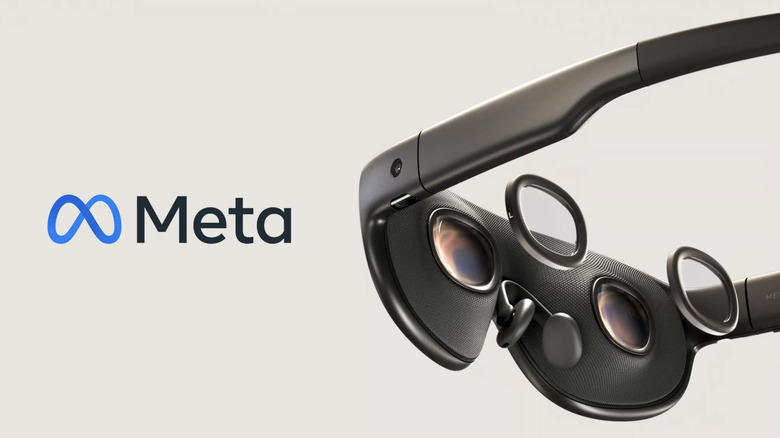
On the spatial computing front, attention centers on an unreleased mixed reality device known internally as "Phoenix." Images of the hardware recently surfaced within an update to HorizonOS, Meta's operating system for spatial devices. The leaked visual assets reveal a notably streamlined profile that resembles compact goggles far more than traditional, bulky VR headsets.
Tethered Architecture and Controller-Free Navigation
A defining characteristic revealed in the firmware images is a visible physical cable extending from the rear of the headstrap. This visual detail aligns with earlier reporting that Phoenix will utilize a tethered architecture, offloading core processing components and battery cells to an external pocket puck. In spatial computing engineering, offloading these components helps resolve the persistent trade-off between device weight and thermal dissipation, keeping the head-mounted visor lightweight and comfortable for prolonged wear.
Furthermore, reports indicate Phoenix will forego dedicated handheld physical controllers entirely. Instead, the device is expected to rely on built-in optical sensors for hand tracking and eye tracking, allowing users to navigate interfaces through gaze selection and intuitive finger gestures.
Qualcomm Snapdragon Reality Elite Architecture
Under the hood, industry analysts anticipate that Phoenix will serve as an early commercial showcase for Qualcomm's Snapdragon Reality Elite processor, which was unveiled earlier this year. Specifically engineered for slim-profile mixed reality headsets, this chipset delivers the processing efficiency required to handle multi-camera spatial tracking, spatial audio, and high-fidelity rendering within tight thermal thresholds.
HorizonOS, Entertainment Media, and Photorealistic Avatars
A new hardware form factor typically accompanies substantial updates to Meta's operating platform, HorizonOS. Given that Meta has shuttered several internal VR game studios over the past year, observers do not anticipate major first-party gaming announcements. Instead, Meta appears to be repositioning its spatial platform toward premium entertainment and immersive media.
Reporting from Deadline revealed that Meta has backed an upcoming 3D horror series adapted from the A24 film Talk to Me, specifically formatted for immersive viewing on Meta headsets. Such partnerships highlight an ongoing shift toward passive and cinematic spatial entertainment.
In parallel, Meta may share progress on photorealistic holographic avatars. First previewed two years ago alongside the Orion augmented reality prototype, Meta has previously indicated that holographic avatar technology would eventually migrate to consumer virtual and mixed reality environments. Qualcomm has similarly highlighted photorealistic avatar rendering as a key strength of the Snapdragon Reality Elite chip. Additionally, a report from The Information suggested that a digital avatar of CTO Andrew Bosworth could make an onstage appearance during the keynote. When Meta reconsidered closing Horizon Worlds in VR earlier this year, Bosworth emphasized that augmented and mixed reality remain integral components of the company's broader vision for interconnected virtual spaces.
AI Initiatives: The Muse Agent and Developer Ecosystem
Connect 2026 marks the first Connect gathering following a wave of foundational AI models and software tools released by Meta's dedicated superintelligence division. Central to the software narrative is Meta's conversational AI agent, known as Muse. Meta previously indicated that smart glasses support for Muse would arrive in the near future, making Connect an opportune venue to demonstrate how the agent handles context-aware voice tasks on wearable devices.
Agent-level capabilities align closely with the rumored camera-free smart glasses, where natural language understanding and real-time audio interaction take precedence over computer vision. Meta is also expected to address its developer ecosystem. While Meta announced initial third-party application support for camera glasses at last year's Connect, broader developer adoption has progressed gradually. Having recently enabled developers to build dedicated applications for Meta Ray-Ban Display, Meta may showcase a new slate of third-party software integrations to demonstrate practical utility across its wearable and headset portfolio.
Frequently Asked Questions
When and where is Meta Connect 2026 taking place?
Meta Connect 2026 begins on September 23, 2026, with an opening keynote by CEO Mark Zuckerberg at 4:00 PM PT / 7:00 PM ET, broadcast live from Meta headquarters in Menlo Park. Additional developer sessions and the "developer state of the union" will take place the following day, September 24, starting at 10:00 AM PT / 1:00 PM ET.
What is the rumored 'Phoenix' mixed reality device?
Phoenix is the codename for an upcoming lightweight mixed reality headset from Meta. Leaked firmware images from HorizonOS reveal a slim, goggle-style design connected via a tethered cable to an external compute puck. The device is reported to feature hand and eye tracking rather than handheld controllers and is expected to utilize Qualcomm's Snapdragon Reality Elite processor.
Why is Meta reportedly developing smart glasses without cameras?
Eliminating camera sensors allows the frames to maintain a lighter, more conventional aesthetic while focusing exclusively on audio and voice-driven AI interactions through integrated microphones. This approach also directly circumvents widespread public backlash and privacy concerns regarding recording devices in everyday social settings.
What updates are expected for Meta's AI assistant and software?
Meta is expected to demonstrate wearable capabilities for its Muse AI agent, announce updates to HorizonOS, highlight immersive entertainment content such as a 3D adaptation of A24's Talk to Me, and present advances in photorealistic digital avatars.


0 Comments