

TL;DR
- Legal Conflict: In late August, TCL filed a lawsuit in federal court accusing rival Samsung of deceptive marketing by labeling its budget M-series LCD televisions as “Mini LED.”
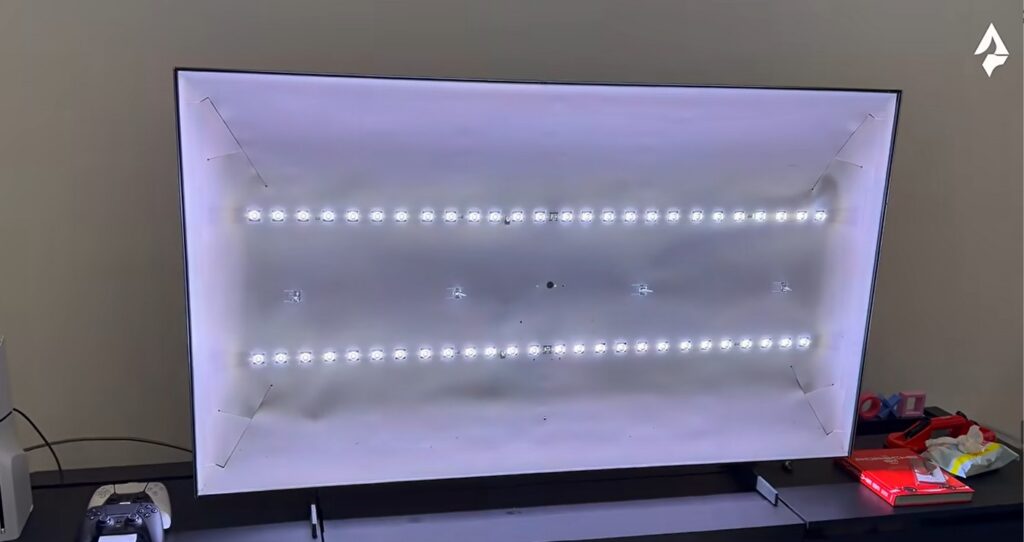
- Core Technical Allegations: TCL claims Samsung's M70H, M80H, and M90H models lack Full Array Local Dimming (FALD), rely purely on software-based dimming, and use only a few dozen 0.5 mm LEDs mounted on two strips rather than thousands in an array.
- Samsung's Defense: Samsung declined to address specific claims but stated through a spokesperson that it intends to vigorously defend against the lawsuit.
- Industry Standards Vacuum: Display analysts note that no authoritative standards body governs what qualifies as a “Mini LED,” creating marketing ambiguities across the TV industry.
- Independent Benchmark Findings: Testing by RTINGS revealed low contrast (6,440:1) on the Samsung M80H, illustrating practical performance gaps between software-dimmed budget panels and true hardware-controlled FALD sets.
A dispute between two of the world's largest television manufacturers has brought the definition of modern display technologies into sharp focus. In a federal legal action, TCL has formally challenged Samsung over how it markets its entry-tier television displays, asserting that Samsung's budget-friendly M-series sets do not possess the hardware characteristics required to be called “Mini LED.”
The controversy centers on consumer expectations and technological substance. While consumers associate Mini LED with premium contrast and enhanced High Dynamic Range (HDR) capabilities, the absence of universally recognized technical definitions has created an environment where brand terminology and hardware realities often diverge.
The Lawsuit: TCL Accuses Samsung of Misleading “Mini LED” Labeling
According to a lawsuit filed in late August in the U.S. District Court for the Central District of California, TCL alleged that Samsung engaged in fraud to counter TCL's QM-series Mini LED lineup. The complaint contends that Samsung's M-series televisions—encompassing the M70H, M80H, and M90H lines, which span prices from $300 for a 43-inch set to $2,300 for a 100-inch model—are repackaged versions of entry-level displays.
Specifically, the legal filing claimed that the M-series models are “merely recycled… pre-existing, low-end, standard LED televisions” drawn from Samsung's entry-level Crystal UHD series that were “re-labelled… as ‘Mini LED.’” The complaint added that the sets contain “none of the technological advancements associated with Mini LED technology, including [full array local dimming].”
When questioned about the specific allegations detailed in the filing, Samsung did not address the individual technical claims. A company spokesperson stated that Samsung intends to vigorously defend itself against the lawsuit.
Hardware FALD vs. Software Dimming: The Technical Divide
At the center of the dispute lies Full Array Local Dimming (FALD), widely recognized by display specialists as the most advanced backlight mechanism for liquid crystal displays (LCDs). A genuine FALD system employs dozens, hundreds, or thousands of miniature LEDs arranged behind the screen and divided into independently controlled zones. By brightening or dimming specific zones according to the scene, FALD elevates contrast ratios and enables impactful HDR reproduction.
On product pages for the M-series, Samsung lists a specification titled “Micro Dimming” marked as “Supreme Mini LED Dimming.” However, downloadable specification sheets include a small footnote clarifying the feature: “Supreme Mini LED Dimming is Software-based (not full-array hardware-based) technology.” While Samsung also utilizes the “Supreme Mini LED Dimming” descriptor on its higher-tier Neo QLED TVs—which TCL acknowledges as authentic Mini LED displays—those Neo QLED spec sheets omit the software-only disclaimer.
How Software-Based Dimming Differs from Hardware Dimming
Software-based dimming operates through image processing algorithms rather than physical zone manipulation. The display processor analyzes incoming frames, divides the visual data into sectors, and dynamically manipulates pixel values to enhance perceived contrast. Crucially, the physical backlight behind the liquid crystal layer remains uniform across the entire screen, preventing true localized illumination control.
Display analysts emphasize that this algorithmic manipulation cannot replicate physical local dimming. Guillaume Chansin, associate director of displays and XR at Counterpoint Research, noted that software-based dimming “will never be as effective as a well-designed, hardware-based local dimming solution, especially in scenes that are more susceptible to blooming artifacts.” Chansin acknowledged that software optimization remains vital, allowing some manufacturers to deliver respectable quality with fewer zones, but hardware remains the baseline.
Eric Virey, principal displays analyst at Yole Intelligence, affirmed that FALD is inherently a hardware architecture requiring a 2D array of LEDs uniformly distributed across the panel. Virey remarked that “‘software-based’ Mini LED dimming just doesn't make any sense if you don't have that full, 2D-array of LEDs or Mini LEDs in the backlight.” Bob O'Brien, research director at Counterpoint, added that Mini LED was conceived fundamentally as an evolution of FALD with smaller emitters and denser dimming zones, meaning the display industry has long presumed that Mini LED displays incorporate hardware FALD capabilities.
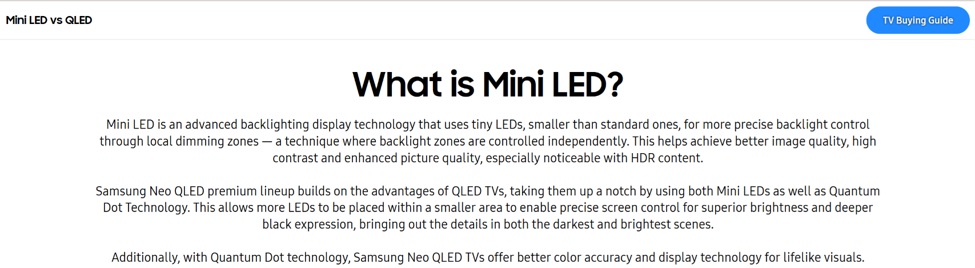
Samsung's own consumer-facing educational portal echoes this association. On its official website, Samsung explains that Mini LED backlights utilize smaller LEDs “for more precise backlight control through local dimming zones—a technique where backlight zones are controlled independently.”
In its court filing, TCL claimed that it physically disassembled Samsung M70H and M80H units. The company asserted that the teardown revealed neither the control chips nor the physical circuitry necessary for local dimming, noting further that the sets utilize the same processor found in Samsung's baseline Crystal TVs.
What Defines a “Mini LED”? An Industry Without Standards
Beyond backlight control schemes, the physical dimensions and quantity of the LED emitters represent another focal point in the conflict. Across the electronics sector, there is no standardized size criterion establishing where a standard LED ends and a Mini LED begins.
Industry references have historically defined Mini LEDs across varied dimensions, such as 50 to 300 micrometers (0.05 to 0.3 mm), 100 to 200 micrometers (0.1 to 0.2 mm), or broadly below 200 micrometers. In its legal complaint, TCL stated that Mini LEDs generally measure between 0.1 mm and 0.3 mm, while alleging that the LEDs inside Samsung's M-series televisions measure approximately 0.5 mm—a dimension typically categorized as a conventional LED.
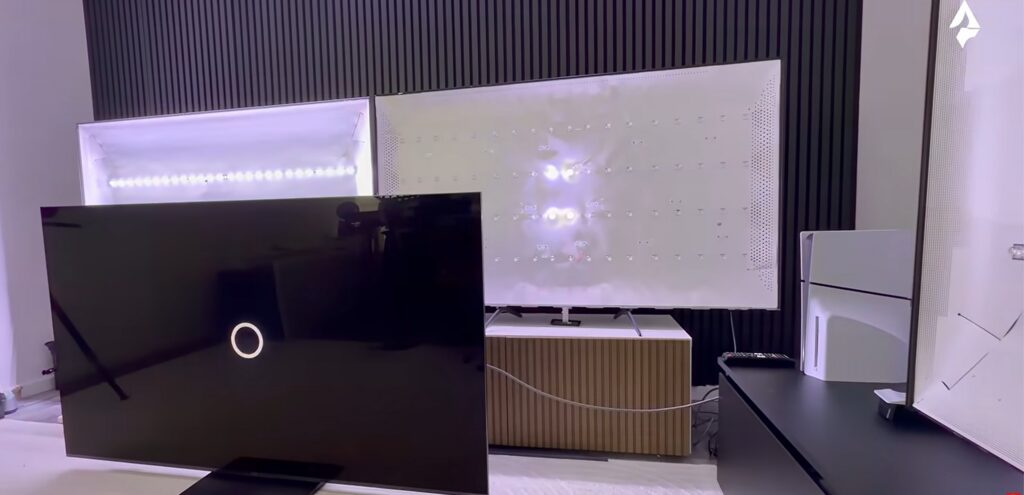
Furthermore, TCL's filing alleged that while high-performance Mini LED panels contain thousands of diodes positioned across a full panel array, Samsung's M-series sets employ merely a few dozen LEDs arranged along two aluminum strips. Independent hardware analysis from the YouTube channel AP Tech similarly demonstrated an M-series backlight assembly comprised of two rows of LEDs rather than a full-surface matrix.
The lack of clear rules leaves display marketing largely unregulated. As Counterpoint's Bob O'Brien pointed out, “There are no organizations with authority to make and enforce such standards. TV brands have historically exploited the lack of clear standards to be more creative in their marketing.” While establishing rigid criteria might appear to be a straightforward remedy, Yole Intelligence's Eric Virey cautioned that standardizing rapidly moving display categories can lead to “an endless race,” observing that whenever new hardware emerges, new marketing labels quickly follow and risk being stretched.
Performance Comparison: Independent Lab Findings
While the legal debate unfolds over technical classifications, performance testing highlights the practical difference between edge-strip illumination and full-array backlights. Independent evaluation conducted by testing outlet RTINGS provides direct measurements across these differing architectures:
- Samsung M80H: RTINGS measured a calibrated contrast ratio of 6,440:1, observing that dark scenes appeared washed out in darkened viewing environments. On HDR content mastered at 600 or 1,000 nits, the display cut off tone mapping abruptly at its peak output, causing bright highlights to blend together without nuanced gradation.
- Samsung Neo QLED QN80H: By comparison, Samsung's $1,200 Neo QLED model—which features individually addressable hardware dimming zones—achieved an 80,000:1 contrast ratio after calibration. RTINGS commended its black uniformity and confirmed its suitability for home theater dark-room viewing.
- TCL QM6K: TCL's budget Mini LED set ($550 MSRP) reached a measured contrast ratio of 118,059:1 after calibration due to its local dimming system. However, RTINGS noted that local dimming alone does not guarantee universal excellence; the QM6K exhibited noticeable haloing around bright objects and delivered mediocre HDR brightness.
Consumer Takeaway: Looking Beyond Marketing Labels
TCL's commercial rivalry with Samsung undeniably shapes its decision to pursue litigation, as dampening consumer confidence in Samsung's entry-level models could benefit TCL's competing QM-series. Nonetheless, the dispute raises fundamental questions for shoppers evaluating television technology.
Marketing terms such as “Mini LED” and “QLED” have become ubiquitous across retail packaging, yet they rarely convey a panel's full engineering composition. TV makers frequently omit vital specifications, including exact diode measurements, the total number of dimming zones, and authentic sustained brightness ratings. For buyers seeking genuine visual improvements, independent instrumented reviews and performance benchmarks remain far more dependable than branding printed on the box.
Frequently Asked Questions
What is the core issue in TCL's lawsuit against Samsung?
TCL filed suit in the U.S. District Court for the Central District of California alleging that Samsung misleadingly marketed budget M-series LCD TVs as Mini LED displays. TCL claims the televisions lack hardware-based local dimming and instead use standard-sized LEDs on two strips, which TCL argues amounts to recycling entry-level Crystal UHD sets under a new label.
What has Samsung said in response to the lawsuit?
A Samsung spokesperson announced that the company intends to vigorously defend against the lawsuit. Samsung did not provide responses to specific technical questions regarding the filing.
How does software dimming differ from Full Array Local Dimming (FALD)?
FALD uses a physical matrix of LED zones across the back of the screen that brighten or darken independently to match on-screen images, boosting contrast. Software dimming analyzes frames and adjusts pixel brightness via processing while the backlight remains uniformly illuminated across the entire display.
Are there official standards defining what a Mini LED TV is?
No. Display industry analysts confirm that no standard-setting organizations possess the authority to enforce definitions for Mini LED technology, diode size thresholds, or minimum dimming zone requirements.
How did independent testing evaluate the Samsung M80H?
Testing by RTINGS found the Samsung M80H achieved a 6,440:1 contrast ratio, leading to washed-out dark scenes in dark rooms, while its HDR tone mapping clipped bright highlights together, showing a significant performance gap compared to hardware-dimmed Mini LED sets.


0 Comments